Win more jobs. Land bigger contracts. Without dropping your price.
For landscape contractors who quote residential work, from an award-winning, C-27 licensed contractor with 26 years in the business and more than 500 builds:
The “7-Minute Proposal System” Helping Landscapers Win Up to 3X More Jobs - and Land Bigger Contracts - Without Dropping Their Price
Discover the battle-tested AI system that puts a finished proposal in the homeowner’s hands the same day, before competing bids arrive. So you win jobs you’d normally lose, save hours every week, and skip the AI learning curve.
From Brett PierattOwner, San Diego Landscape Solutions. C-27 licensed contractor.
You know the drill.
You spend an hour driving to the property. Another 45 minutes walking the yard, measuring, listening to the homeowner describe the patio she has in her head.
You take a few photos on your phone. You shake hands, and you tell her you’ll get something over to her.
Then you go home, eat dinner with one eye on your laptop, and at 9 PM you’re still typing up an estimate.
Line items. A few lines describing the work. A number at the bottom that has to do all the selling and still leave enough meat on the bone.
You send the estimate. And then you wait.
Three days go by. You follow up. Nothing.
A week goes by. You follow up again, trying not to sound desperate. Finally she writes back:
“Thanks so much, we decided to go with someone else. Your price was a little higher than we hoped.”
And here’s the part that stings. You know your work is better.
You know the guy who got the job is going to show up in a truck that leaks, rush the install, and be gone. You know she’s likely going to call you in two years to fix it.
But she never saw that. All she saw was two pieces of paper with numbers on them.
Your proposal
$8,400
VS.
The other guy
$6,900
Yours said $8,400. His said $6,900.
And here’s what makes losing that job sting even more. You didn’t just lose the job. You lost every hour you put into trying to win the work.
You’d already made the drive, spent an hour walking her property, and burned another night at the kitchen table putting the proposal together. Then the customer went with someone else, and all that time amounted to nothing.
When price is the only difference a customer can see, price alone becomes the deciding factor.
I call this the Comparison Trap. Once you understand how the Comparison Trap works, you start seeing the pattern in every lost bid.
That’s not because the homeowner is cheap. She’s just been handed two things she can’t tell apart and asked to pick one. Of course she picks the smaller number. Anybody would.
That was my life for a long time. For nearly two decades, I watched the same pattern play out over and over.
And the problem got worse because I refused to be the cheapest bid. I still refuse. Being the cheapest is a race you win by going broke slower than the other guy.
So I was stuck between two bad options: Drop my price and eat the slimmer margin, or hold my price and lose the job.
If you’re reading this, my guess is you’ve been in this exact same spot before. Maybe even this week.
And odds are, you don’t have a leads problem.
You’re bidding jobs and losing them. Getting more leads won’t fix that. You’ll just keep losing more of the jobs you bid. Why do more of what’s not working?
You don’t need more leads, more trucks, or more employees. You need to win more of the leads you already get, at a higher price.
The rest of this page is how.
This is for you if:
You do residential work and you sit down with homeowners to sell jobs.
You’ve lost work to somebody cheaper who you know does worse work.
You’re writing proposals at night after a full day in the field.
Your average job runs anywhere from $4,000 to $75,000.
You run a maintenance company. The real money in maintenance is enhancement upsells, and this shows her the upgrade while your crew is still on her lawn.
You’re a solo operator, or you run a crew, or you have a small office. The smaller you are, the more this is worth, because right now you are the proposal department.
This is not for you if:
You do commercial bid work where the low number wins by rule.
You want a general “AI for your business” course. This is one system for one job. If you just want to learn AI, there’s plenty of free material out there and I’d point you to it.
You want something that runs itself while you do nothing. This takes seven minutes a proposal. Seven minutes isn’t zero.
Hi, my name’s Brett Pieratt.
I’m not a marketer. I’m not a guru. I’m a landscape contractor.
I’ve been in the landscaping business in San Diego since 2000, with my own licensed business since 2004. I’ve dug the holes, eaten the change orders, and written the 9 PM estimates.
I’ve been through exactly what you’re going through, including the parts nobody posts about.
So I’m only going to promise you what I’ve done myself, on my own jobs, with my own customers.
I didn’t find a magic button. I didn’t find a way to make homeowners stop caring about money.
What I found was a way out of the Comparison Trap, built around one realization:
The reason you lose jobs to cheaper guys usually has nothing to do with your price. It’s that the homeowner can’t see the difference between you and the guy who’s cheaper.
She can’t picture the finished job. You can.
You’ve built enough of these projects to see the finished job before the first shovel hits the ground. In your head you already see the bluestone, the lighting, the way the bed line curves around the maple.
She’s looking at a list of line items and a number at the bottom.
So she does the only thing she can do with two things she doesn’t understand. She compares the numbers.
Once I understood that, the whole problem changed shape.
I didn’t need to be cheaper. I needed to get her out of the Comparison Trap before she ever put my number next to his.
And I needed a way to break that comparison while she was still excited from the walkthrough, without making the process too expensive to use on every lead.
I eventually figured out how. These days I close three times as many of the proposals I send.
Last month a woman told me flat out that my price was higher than she wanted to spend, and she still handed me the job, then added five thousand dollars to it before we broke ground. I’ll show you exactly how that happened in a minute.
I’ll also show you:
The question my wife asked while we were shopping for a car, and why homeowners started leaning in instead of going quiet.
The four seconds in a driveway that got me fired off a job I’d already sold, and the one sentence that makes sure you never hear those words yourself.
Why the bid that lands the same day beats a better bid that shows up on Friday, and how to be first every time without rushing the work.
Why a $64,000 backyard takes no longer to bid than a $9,500 front yard, so going after bigger work costs you nothing.
But I want to be straight with you first, because my first attempts went very wrong long before anything went right.
As I said, my name is Brett Pieratt.
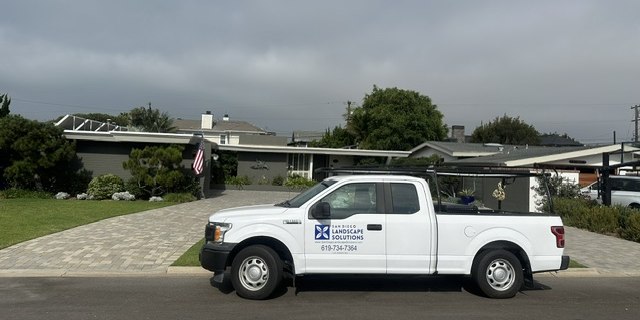
I own San Diego Landscape Solutions, an award-winning design and landscaping firm out of Coronado, California.
The company didn’t start that way.
I started in 2000 with five maintenance accounts, a Honda mower I bought at Home Depot, a weedwhacker, a blower, and a four-cylinder Toyota pickup. That was the whole company.
I got my C-27 contractor’s license in 2007. Incorporated in 2010. Twenty-six years later, I still show up every morning.
Along the way we’ve been voted Best of Coronado, we’re A+ rated by the BBB, and we’ve picked up seven Angie’s List Super Service awards.
26Years
500+Projects
C-27Licensed
35–50Jobs a Year
I’m not telling you that to brag. I’m telling you so you know I’m a real contractor.
And I’m not a tech guy. Never have been.
Everything I’m about to show you, I built inside a working landscape business, on real jobs, with real customers. And I learned most of what’s in here the expensive way.
Then everybody started talking about AI.I wrote it off for a long time.
Everything I saw was either for tech people or some guy on YouTube promising it would “transform my business,” which is what the software salesmen said in 2011 and again in 2018.
I sat through a couple of trainings. They didn’t click. Nothing in them had anything to do with standing in a wet backyard in April trying to close a $12,000 job.
But I kept coming back to that one problem. The homeowner can’t see the finished job.
And the one thing these tools are good at is showing someone what a finished project could look like before it exists.
So I started messing with AI, and the moment I finally saw AI’s real use wasn’t even at a jobsite.
My wife and I were shopping for a car. She looked at me and said, “Why don’t we upload a picture into ChatGPT and see it in the color I actually want?”
Fifteen seconds later she handed me her phone. The car was exactly what she wanted and looked completely real.
That’s when my mind jumped to backyards. If AI could do that with a car, what could it do with an empty yard?
That afternoon I photographed the empty space behind my house and asked for a tropical pool. A minute later, I had the finished backyard on my screen.
Then a fire pit and a BBQ island. Then a full modern redesign.
The real yard
The tropical poolFire pit and BBQ islandThe modern redesignAnother version
My wife looked at one and said the exact thing every customer says: “It’s nice, but can you make it more modern?”
I laughed, because after twenty-six years in this business I finally had in minutes what had always taken me a week or two. A way to show someone the finished job before we ever broke ground.
So I started using AI renderings on real customers. And I want to tell you how badly those first attempts went, because this is the part that matters.
I sold a $5,500 patio and planting job off a beautiful rendering. The homeowner loved seeing what her finished yard could look like, picked her design, and put down a $3,000 deposit.
Everything was perfect.
Then on the morning of the install, with the plants and materials already loaded on my truck, she fired me.
I GOT FIRED.
From a job I’d already won, before my crew even showed up to start the work.
Over something I said in about four seconds, standing in her driveway, that I didn’t think twice about. A detail so small I’d have told you it couldn’t possibly matter.
By the time I understood what had happened, I’d already lost the job. I refunded the entire $3,000 deposit and drove away with about $2,000 in profit gone and a client who never called me again.
I’ll come back to exactly what I got wrong in a second.
First, here’s the part that should bother you.
If you’re already showing homeowners AI pictures, there’s a good chance you’re setting up that exact same conversation right now and have no idea. That misunderstanding stays invisible right up until it costs you a job.
And the cause is the opposite of what every contractor assumes. The problem was never that the picture looked fake.
The problem was what that beautiful picture had quietly promised her, without me realizing.
The fix takes about ninety seconds. I’ve never skipped that step since, and I’d have paid every dollar of that refunded deposit to know what to say that morning.
But fixing that still wasn’t enough.
Even after I learned how to prevent that misunderstanding, I’d watch homeowners fall in love with the picture and still say, “Let me think about it.”
A beautiful image gets her excited. The image alone doesn’t close the job.
I was handing people a stunning render, then stapling it to the same tired estimate I’d always sent, with the same scary number sitting at the bottom.
The picture opened the door. I was still losing them in the doorway.
That’s when I finally understood what was missing. The image was never what closed the job.
The image got the homeowner interested, but I didn’t have a system for everything that came next.
So I almost gave up on the whole AI thing. Then I got stubborn instead.
I spent months building that system, and I mean months. The picture was the easy part. The hard part was everything around the image.
The thirty-second check I run before a rendering ever leaves my truck, and the one line that goes under every one.
The way I lay a proposal out now so her eye never lands on the price first.
The hold-your-price move I run the second she tells me the number feels high, the one I used to fumble every single time.
The one question that turns a job into a bigger job without ever sounding like a pitch.
A dozen small pieces like that, and nearly every one of them cost me a job to figure out.
Most of my early attempts failed, and some of those failures cost me real jobs, which is an expensive way to learn.
But eventually I had the whole system down to a set of steps I could repeat. Then I timed the process.
Seven minutes. From the photos on my phone to something in her hands that made her want the job.
Not seven minutes to figure out what the work was worth. That part is still mine, and it always will be.
Seven minutes to turn what I already knew into something she could actually see and say yes to.
The first time I ran the whole system start to finish, I sent the finished proposal that same afternoon.
And the first job this system closed for me? A $35,000 backyard remodel for a referral, and the project kept growing after we signed.
That’s when I knew this wasn’t a trick that worked once. I had a repeatable sequence I could run on every job.
Here’s what I ended up with, and it’s not what you probably think.
The advantage isn’t “use AI.” Anybody can use AI. Your competitor can open ChatGPT tonight for free.
That’s not a system, that’s an app.
What I built is a specific sequence: how you take the photos, what you ask for, what you never ask for, what you show her, in what order, how you present the price, and what you say when she pushes back.
And here’s the part most people miss.
The picture isn’t the product. The picture is the door.
It gets her to stop, lean in, and actually want the finished project.
But here’s the catch: your competitor can make the exact same picture tonight, for free, in about a minute. The picture is the easy part, and it’s the part anyone can copy.
What he can’t copy is what you do in the next six minutes: the order her options are laid out in, where the price sits, the exact words you use when she hesitates, the upgrade you show her at the right moment.
That sequence is the real advantage.
The picture lets her see the finished job. The system is what lets her see the difference between you and the cheaper guy.
The same picture is a party trick in his hands and a signed contract in yours.
That’s how the Comparison Trap breaks. The moment the homeowner can see the difference, you can win without being the lowest bid.
So let me introduce you to:
The 7-Minute Proposal System
The complete sequence, start to finish, in order. Site visit to sent proposal, with a checklist so you never have to remember what comes next.
Digital product, shown on devices for illustration. Nothing physical ships. Instant digital download.
At the core of the system are five moves. I call them The Five-Move Playbook.
Because that’s exactly what they are: the rest of the system, the part I didn’t have the day the picture first opened the door.
Miss any one of them, and that’s where the job quietly slips away:
The Opening Shot — exactly how and where to shoot the photos so what comes back looks like her actual yard, not a stock photo. Angle, height, time of day, what to keep in frame and what to keep out. Most contractors get this wrong in the first thirty seconds, standing in the wrong spot, and everything downstream inherits the mistake.
The 4-Tell Reality Filter — keeps what comes back from looking like a video game. What to specify, what to never specify, and the four tells that make a homeowner’s guard go up. Miss them and she trusts your numbers less than before you showed her anything.
The Invisible Close — the quiet restructure that changes what she’s deciding. She stops weighing whether to do the project and starts choosing which version she wants. She never feels sold.This one did more for my average job size than anything else I’ve ever tried.
The One-Line Protection — the ninety seconds I now spend on every single proposal, word for word. It’s what keeps an exciting picture from turning into a canceled job on install day. Skipping it cost me a $5,500 job and a client who fired me with the plants already on my truck.
The Driveway Advantage — how to get the whole thing in her hands the same day, while she’s still excited, and before she’s collected a single other bid. It’s why everything else in here is built to run fast.
Seven minutes. Not fifteen chapters of theory.
Five moves you run the same way every time, on a $4,000 walkway or a $75,000 renovation.
And the Playbook doesn’t work alone. Five tools inside the system back it up:
The Prompt Vault — the essential word-for-word prompts that run the five moves. You copy, paste, and go. No writing, no guessing, no “getting good at AI.” Behind them sits a searchable library of 100 specialized prompts for every part of the business, plus project-type render prompts: patios, walls, plantings, irrigation, lighting, water features, full renovations. You’ll use the same few every day, and pull from the library when a job calls for something specific.
The Hold Your Price Script — what to say, word for word, when she says your number is high. It’s the move that turned “your price is too high” into a job worth more than double, without dropping a dollar.
The Second Chance Sequence — for the ones who go quiet. Most contractors send one limp follow-up and write the job off. This is the exact sequence I run instead: what to send, when to send it, and how to sound like a professional checking in rather than a guy who needs the work. There’s also a version for proposals that died months ago. I’ve had jobs come back from the dead off a single message. One message collects on work you already did.
The Upsell Ladder — the move that turned a $4,500 front yard into a $9,500 job, and turned a $64,000 backyard into $67,600 while the crew was already on site. Which upgrade to put in front of her, the exact moment to do it, and how to present it so it lands as help instead of a pitch. You’re not selling. You’re showing her something she already wanted and didn’t know she could have.
The Bid Package Builder — how to assemble what she actually receives, so it lands as a package, not an estimate: the rendering, her options, a clean pricing sheet, and my company profile, the piece I’ve sent with every bid for about ten years. The company profile is rebrandable, so it goes out under your logo, your photos, your story. By the time she’s done reading it, yours is the only bid that comes from a company she feels like she knows.
And when you run it, what lands in her hands isn’t an estimate. It’s a bid package.
She gets the rendering. Her options, laid out the right way. A clean pricing sheet. Your company profile. While the other guy sends a number on a page.
Very few contractors in your market are sending a package like that. That’s the difference she can see. And when she can see the difference, the price stops being the whole conversation.
Add it up, and here’s what actually changes for you:
Your evenings back. The proposal that used to take all night takes seven minutes.
Your bid lands first, the same day, while the other bids are still days away.
You look like the most established outfit bidding the job, whatever your actual size.
Her questions get answered before she thinks to ask them. So what comes back isn’t skepticism, it’s “can we change this material?”
Let me be precise about that seven minutes.
I’m not telling you AI is going to price your job. You still walk the property.
You still take your measurements, figure your materials, and decide what the work is worth. That’s your judgment, built one job at a time, and no software is going to hand it to you.
But once you know your number, turning it into a proposal the homeowner can actually see and understand used to cost me an entire evening. Now it costs me seven minutes.
That’s why the finished proposal can go out the same day instead of next Thursday.
What ate my evenings was never the pricing. Two decades in, I know what a patio costs to build before I’m back in the truck. It was everything after.
Typing the same scope paragraphs I’d already written a hundred times. Trying to make a page of line items feel like the yard she’d described to me, knowing it never would. Then sitting there staring at the number, wondering if it was going to cost me the job.
Any software can make an estimate look tidy. Nothing I ever bought helped me make it convincing.
And that’s just the proposal. On jobs that need design work, the old math was worse. Before a customer could see anything, I’d spend a week or more on drawings and concepts. Now she’s looking at the direction in an hour or two, while she’s still excited about the project.
One more thing, because you’ll think of it before I say it. These are concept visuals, not construction drawings.
AI doesn’t know your soil, your grades, your setbacks, or what your city will permit. My 7-Minute Proposal System is built with that in mind.
It shows you how to sell the direction without accidentally promising a plant, a dimension, or a finished condition you can’t deliver. That’s your reputation on the line, and it’s handled deliberately, not hoped for.
What you send now
Line items and a total
One price to accept or reject
Arrives days later
Easy to compare on price
What the homeowner gets instead
Her actual property, finished
Clear options to choose between
Arrives before she’s talked to anyone else
Impossible to compare on price
Here’s what changed for me. When a customer can see the finished project, they lean in.
She starts asking questions about the project. Can we do the fire pit in a different stone?What if the seating wall came out another two feet?
Those aren’t price objections. Those are buying questions. And every one of them makes the job bigger.
And the ones who do go quiet? I don’t write them off anymore either.
That used to be the worst part of this job, the silence after you send it. That’s exactly what my Second Chance Sequence is for, and it’s brought back jobs I’d already given up on.
Here’s what the 7-Minute Proposal System did for my close rate.
Back when my proposals went out three or four days after the walkthrough, most of them died in her inbox.
Now she’s looking at her own yard within the hour, and the full bid package follows the same day instead of the same week.
I close three times as many as I did then.
Same me, same prices, same site visits, same estimates.
I went back through my own numbered proposals and counted. The yeses aren’t hard to spot.
Five days is the whole difference.
The ones that reached her the same day as the walkthrough closed about half the time. The ones that went out five days later closed under fifteen percent.
Same contractor, same work, same price.
Think about why. Every day your proposal isn’t in her hands is another day for somebody else to walk off with your job.
And speed only wins you more of them. What surprised me is what the system did to the size of each one.
My crew does 35 to 50 jobs a year, and my average job runs around $20,000. Say you’re in that same range.
Nudge that average up by 15 percent, from $20,000 up to $23,000, just by helping the homeowner see the upgrades she’d have wanted anyway. Across 45 jobs, that could add up to $135,000 in a year.
Without adding a single truck, a single crew member, or a dollar of overhead.
Same leads.Same trucks.Same crew.Same you.
(That’s an illustration with round numbers to show how the math works. It’s an example only, not a guarantee and not a representation of typical results. Actual results vary and depend on your market, your pricing, your lead volume, the services you offer, your experience, and whether you actually run the system.)
Real Life Example #1: The customer who told me my price was too high, spent more than double anyway, and won Coronado’s Blue Ribbon.
This is my favorite one, because it’s the exact situation that used to end with me losing the job.
A homeowner I’d built a backyard for three years earlier called me back. This time she wanted something small, a front-yard refresh.
New plants, a little irrigation, tidy up the pots. About $4,500.
Instead of emailing an estimate and waiting, I photographed her front yard that afternoon and sent her a rendering of what it could become.
She loved the direction, tweaked a couple of things, and then said the words every contractor dreads: “Your price is higher than we expected.”
She was waiting on two other bids.
I didn’t drop my price. She’d seen exactly what she’d get, and she trusted the work.
Two weeks went by. Then she called back.
What she said is the whole reason I built this system:
“Your price is higher than we wanted to spend... but we know you’ll do a great job.”
Then it got better. While we were finalizing, I showed her one more thing.
On the spot she added twelve LED fixtures and custom paver borders to match her existing hardscape. The $4,500 refresh became a $9,500 job.More than double.
$4,500$9,500
An individual case study. Not typical results.
A few months later, her home won Coronado’s 2026 Blue Ribbon Award.
BeforeRenderFinished
Read that again.I won a job at a price she’d told me was too high, while she was shopping two other bids, without dropping a dollar. Then that same job doubled in size.
I didn’t talk her into anything.I didn’t discount anything.
I showed her what the finished job looked like and gave her a way to get more of what she already wanted.
Everybody thinks “your price is too high” has two answers: cut the price, or walk away. There’s a third, and it’s worth more than both: change the comparison.
Once the homeowner could see what they were getting, and trust who they were getting it from, price stopped being the thing they were deciding on.
That’s the Comparison Trap broken in real life.
Now think about the last bid you lost on price. Not a hypothetical one, a real one, the one that still bugs you.
Same house, same walkthrough, same number at the bottom. The only thing that changes is what lands in your customer’s inbox and what you say when they flinch.
That’s exactly the kind of job this system is built to help you win.
And notice what actually did the work. The rendering got her to call me back, but that’s all it did.
Holding my price when she pushed, laying her options out the right way, and making the one move that turns a finished job into a bigger one at exactly the right moment, that’s what won the bid and then doubled it.
The picture started the conversation. The system is what finished the job.
And it’s not a one-off. Remember that $35,000 backyard, the first job this system ever closed?
Instead of trying to describe my vision, I showed them a rendering, and once they could see it, the job kept growing through change orders as we went.
Real Life Example #2:$64,000, three days from a handshake to a signed contract.
This one happened just a few weeks ago:
I got a referral on a Saturday. Met the homeowners, walked the yard, took a few pictures on my phone. That was the whole visit.
An hour later, before they’d heard back from anyone else, they had something to look at. The wife wrote back one word. “Yes.”
That’s the door opening. Everything after that moment is the system. We met Monday to pick out pavers, and by the time we were done they’d added a putting green and turf, because I gave them the opening to. I sent the proposal that afternoon, built the way I build every one of them now, and they signed at six o’clock that night. Sixty-four thousand dollars, three days from a handshake to a signed contract.
A few days in, the owner texted, “Can you add a fire pit?” I wrote the change order from my truck and texted it back. He approved it before I’d started the engine. That’s the kind of momentum this is built to create, when saying yes to more work is the easiest thing on his list all day.
Same seven minutes on a $9,500 front yard and a $64,000 backyard. The only thing that changed was the size of the job.
WalkthroughRender
The proposal
An individual case study. Not typical results.
The moves don’t change between a $4,000 walkway and a $75,000 renovation.
Earnings Disclaimer
The examples on this page are Brett’s own individual case studies, not guarantees and not a representation of typical results. What you make depends on your market, pricing, lead volume, services, experience, and how you use the system.
And here’s something no “online course guru” can show you.
This isn’t a system I dreamed up to have something to sell. It’s what I use every day in a real, licensed, award-winning landscape company:
In business since 2000. Business licensed since 2004, C-27 contractor’s license since 2007, incorporated 2010.
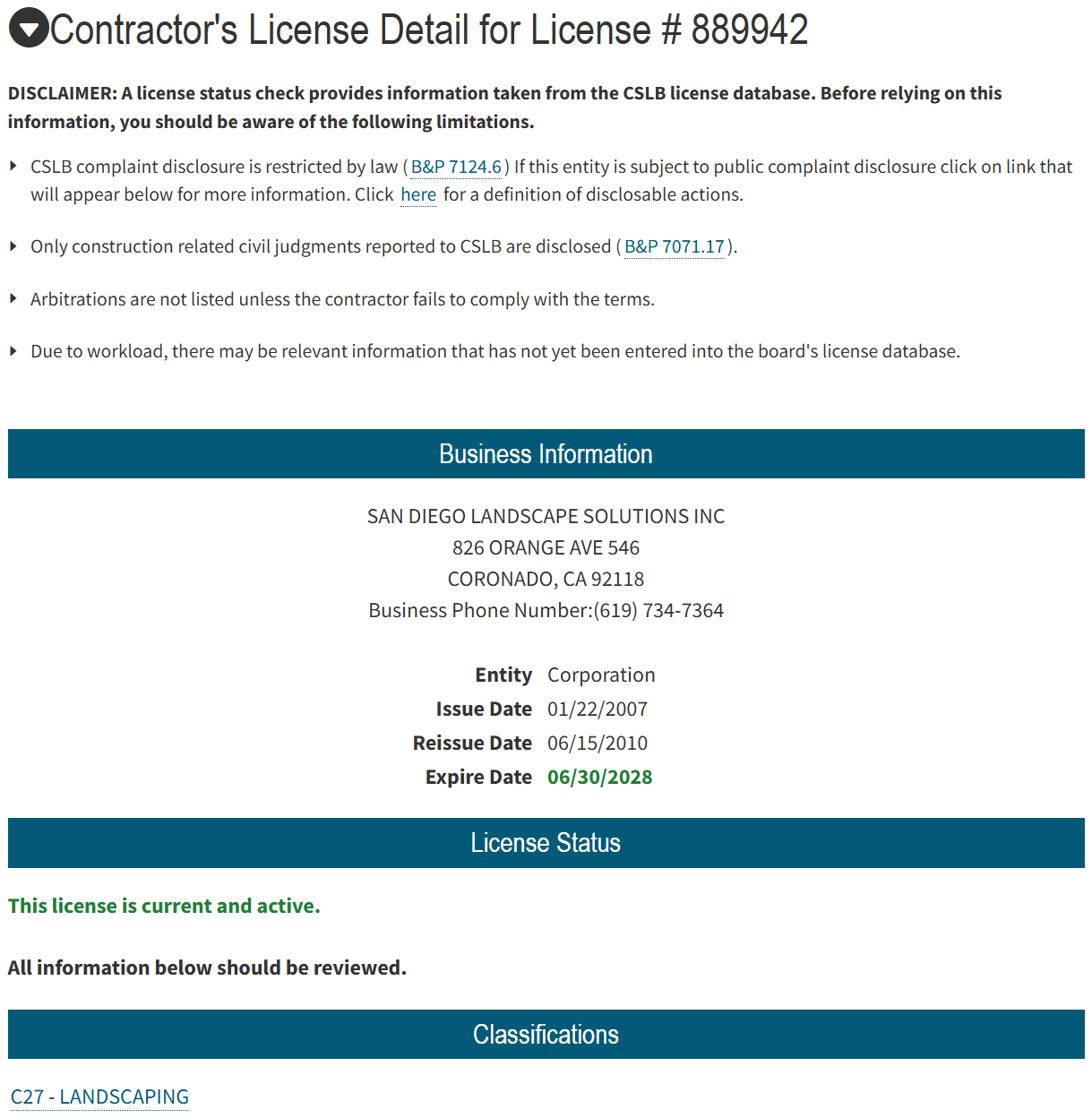
Licensed and insured. California C-27 landscape contractor’s license #889942, public record, plus $2 million in liability coverage.
More than 500 completed projects since 2004, 35 to 50 a year, from $2,000 fixes to $350,000 builds.
A+ rated with the Better Business Bureau, accredited since 2007.
Voted Best of Coronado, 2022.
Angie’s List Super Service Award winner seven times over: 2007, and every year from 2009 through 2014.
Member of the California Landscape Contractors Association.
The C-27 license record, straight from the state contractors board site, exactly as anyone would find it.
I’m telling you all this for one reason. The internet is full of people selling systems they’ve never actually run.
I’m not one of them. This came out of a real business, with real customers, real licenses, and real skin in the game.
Let’s do the math on this like you’d do it on a job.
You bid a $9,000 patio. You lose it to the guy who came in at $7,400.
What did that cost you? Not $9,000. Your actual margin on it, plus the four hours you spent on the site visit and the estimate, plus the referrals that job would have thrown off.
Now, how many of those did you lose last year? Be honest. Five? Ten? More?
If this system helps you land one more job, it’s paid for itself many times over.
And that’s the wrong way to look at the math anyway, because the payoff isn’t one job. It’s every proposal you send from here on out.
Now picture your actual day for a second.
It’s Thursday. You finish a walkthrough at a house you’d normally have written off as a long shot, because you already know two other guys are bidding it.
You’ve priced countless jobs like this one, so you already know your number before you’re off the property.
You sit in your truck for seven minutes, and her proposal goes out the same afternoon, while the other two guys are still planning to get to it over the weekend.
You get the text before dinner.
And dinner is where you are. At the table, phone face down, when it buzzes.
Your wife catches you smiling at it and asks the question you’ve been waiting years to hear. “Wait, you’re finished already?”
You are. You were finished before you pulled into your own driveway.
The game’s on tonight, and you watch it, on the couch, with the kids, instead of hearing it through the office door while you type up line items.
No 9 PM estimate. No week of waiting. No polite email telling you they went another direction.
And when she does say the number feels high, you’re not scrambling or shaving your margin, you know exactly what to say, because you’ve said it before and it worked.
Now run that same Thursday fifty times a year.
And somewhere in those fifty Thursdays, something clicks. You start seeing jobs you used to walk right past. The cracked patio on a mow visit. The dark fence line begging for lighting. Five minutes with your phone, and you’re showing the owner a $2,500 upgrade before you’ve loaded the mower.
Nobody can sell you that part. Once you can show people what’s possible, you can’t stop seeing the opportunities.
That’s the part that matters more than the money. The evenings you get back. The Saturday mornings you’re not at the kitchen table with the laptop open while everyone else is doing something together.
It was never only about the jobs. It’s about having all the work you want, making more on every job you take, and getting your evenings and weekends back while you do it.
Launch price: $149$79
Moving first pays. You’ve seen what speed does for a proposal. The same is true here.
The first 25 contractors get it at $79. After that, it goes to $149 and stays there.
Instant access. It’s in your inbox in under a minute.
Instant digital download, nothing ships. Results vary and are not guaranteed. See our Earnings Disclaimer.
Of every number on this page, $79 is the smallest one.
One job. One patio, one wall, one planting plan you might otherwise have lost.
A single $20,000 backyard you’d otherwise have lost would cover the price of this many times over.
And one extra job is only one way the math can work. The same edge is working on every proposal you send from here on.
And that’s the careful version, using a job you might have lost. Here’s a real one.
Not long ago a homeowner told me my price was higher than the other contractor’s bid. After ten minutes in my truck with her photos, she wasn’t asking about my price anymore. She was asking how much more the upgrade cost.
That job grew from $4,890 to $7,733, and those ten minutes put about $1,400 of extra profit on it.
Original proposal
Revised proposal
Ten minutes, nearly eighteen times the price of this system, on a job I’d already quoted.
The real value starts after the first job, because you can keep using the same process on every proposal you send, at no additional cost, forever.
And the system isn’t all you’re getting. Three bonuses come with it, free.
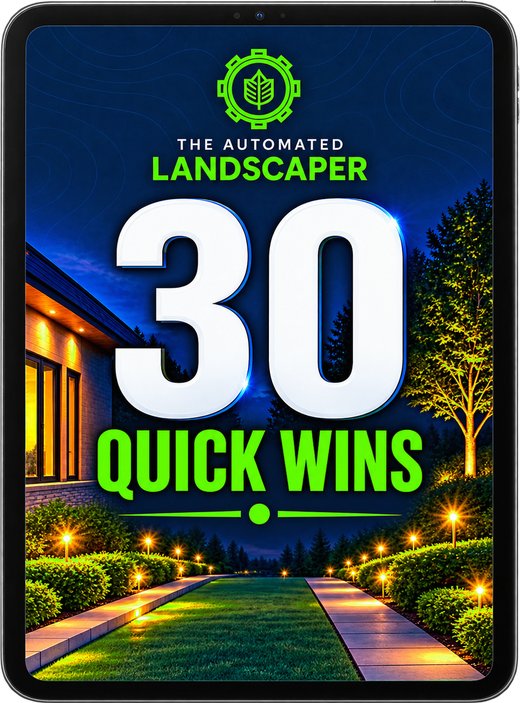
Bonus #1 — 30 Quick Wins. Thirty things you can do in five to fifteen minutes each to win more work, starting today. One a day, three a day, whatever you’ve got time for. Each one is a specific action with the exact steps, not a tip. Open it, pick one, do it before your first appointment tomorrow.
Bonus #2 — The Case Study Library. Real jobs walked through start to finish: the photo, the render, what the customer said, the options, what she picked, and what she paid. The $9,500 front yard, the $64,000 backyard, the planting job that grew $2,800 in ten minutes, the $5,500 job I lost and the lesson it taught me. The whole system in daylight, so you see the moves being made instead of just reading about them.
Bonus #3 — The Client Magnet Guide. The 7-Minute Proposal System wins the jobs you’re already bidding. This one goes to work a step earlier. It’s the exact free guide I hand homeowners before they ever call me, a plain-English guide on how to hire a landscape contractor without getting burned. Put it on your site, hand it out on estimates, text it to a lead. By the time they reach out, they already see you as the expert, and they show up asking “can you do it right?” instead of “can you do it cheaper?” It puts you out of the price war before you even pull up to bid. I’ve used this exact guide to bring in better leads and bigger projects for years, and it’s yours, ready to put your own name on it.
Here’s my deal with you.
Put the 7-Minute Proposal System to work on your next three proposals. Not read it. Use it.
If you aren’t winning jobs you used to lose, at prices you used to cut, and getting your evenings back while you do it, email me at support@theautomatedlandscaper.com within 60 days and I’ll refund every penny.
And you keep all three bonuses: the 30 Quick Wins, the Case Study Library, and the Client Magnet Guide.
I’m not being generous, I’m being practical.
I know what happens when a homeowner sees her own backyard finished before she’s signed anything, because I’ve watched it across a lot of kitchen tables. I’m betting you’ll see the same thing on your first one.
$79 today. 60 days to put it to work on real proposals. Every penny back if it doesn’t earn its keep.
Let me tell you what I think happens in this business over the next two or three years.
Right now, most contractors in your market still aren’t sending same-day visual bid packages. A handful have started showing homeowners a picture.
Almost none of them know what to do next, and that gap is your whole edge.
But the gap is closing. Not fast, but closing.
Pretty soon everybody will be showing pictures, because the picture is the easy part, and easy things spread. Showing a render will stop being remarkable and start being expected.
What doesn’t spread fast is the rest of the system, the sequence that actually wins the bid and grows the job.
The contractors who get that sequence down now are going to spend the next few years winning work at their own price while everyone else is still posting pretty renders and wondering why they aren’t closing. The ones who wait will be the ones wondering.
You already know which one you’d rather be.
But this was never only about beating the other guy to the job.
Think back to why you started your own business in the first place. You wanted to run your own show. You figured it would mean more freedom and better money.
Too often it’s been the opposite: more stress, more headaches, more nights and weekends at the kitchen table just to keep the train moving, and less time with the people you’re doing all of it for.
That’s the real price of every week you keep writing proposals the old way.
Because when the cheap guy wins, you don’t just lose the job.
The evening at the laptop was gone either way. What you lost is everything that evening was supposed to buy you:
The freedom you started this business for.
Time with your wife and kids you’ll never get back.
The income your work is actually worth.
The future you keep telling them is coming.
And you aren’t getting any younger. There are only so many seasons left. And right now you’re spending them writing proposals that lose, while the guy who won spends that same evening with his family, on money that should have been yours.
I did that for years. I don’t anymore.
I win more of my bids, at my price, and my proposals go out the same day, so my evenings are mine again.
That’s what this really buys you. Not just more jobs at better prices, though that’s the part that pays for the system.
It’s the business you thought you were signing up for in the first place.
You know the problem. You’ve been living it.
She can’t tell your work apart from the cheap guy’s, so she decides on the only thing she can compare: the number.
But remember why you’re really here.
You started your own business for freedom.
Not to spend every night writing proposals. Not to apologize for your prices. Not to lose jobs to guys you wouldn’t let touch your own yard.
$79 today for the first 25 contractors, then $149•60-day money-back guarantee•Instant access
Instant Access
60-Day Guarantee
Contractor- Built System
Secure Checkout
Brett Pieratt
The Automated Landscaper
Questions, answered straight.
Do I need to know anything about AI?
No. If you can take a photo with your phone and copy and paste, you can run this. The prompts are written out word for word. You don’t learn AI, you follow steps.
Is this software?
No. It’s a system you run yourself, and the only tool you’ll want is a ChatGPT Plus account, which runs about $20 a month. That’s it. No proposal software, no stack of subscriptions, nothing to install. Twenty dollars a month, next to one landed job, isn’t a decision.
Does the 7-Minute Proposal System really only take seven minutes?
Once you’ve used the system a few times, yes. Remember what the seven minutes covers: turning a job you’ve already priced into a proposal the homeowner can see and say yes to. Your first proposal will take longer, maybe twenty or thirty minutes, while you learn the process. By the third proposal, you’re down to seven. Buy the system tonight and use it on tomorrow’s site visit.
Is showing customers AI images risky?
Yes, if you handle them carelessly. Anyone who tells you otherwise hasn’t done it long enough. A misunderstanding over an AI image cost me a $5,500 job and a client, which is exactly why I created the One-Line Protection. The step takes about ninety seconds per proposal, and once it becomes part of your routine, you’ve addressed the exact misunderstanding that cost me that job. Handled properly, showing the homeowner the picture can actually create fewer problems on install day, because you both agreed on what you were looking at from day one.
My jobs are small. Does this still apply?
Yes, maybe more. The method doesn’t change between a $4,000 walkway and a $75,000 renovation. And the smaller your operation, the more of your own time you get back, because you’re the one writing every proposal.
I already use Jobber (or ServiceTitan, or LMN). Isn’t this the same thing?
No, and you can keep using them. Those are good tools, and they do a different job than this one. They help you produce a proposal: build the estimate, format it, send it, track it. None of that changes whether she picks you or the guy who came in $1,500 cheaper. This is about what she sees, in what order, and what you say when she pushes back on the number. Your software makes the paperwork faster. This makes her stop shopping your price. Run this on top of whatever you already use.
Can’t I just do this myself with ChatGPT?
No. ChatGPT is part of the system, but every competitor you have can open ChatGPT tonight, for free. The tool was never the edge. The edge is everything else inside the 7-Minute Proposal System: the order her options are laid out in, where the price sits, the exact words when she says the number is high, the one line that keeps an exciting render from turning into a canceled job, the right moment to show the upgrade, and that’s not the half of it. None of that comes with the tool. The edge came from two decades of selling this exact work face to face, months of testing, and the jobs I lost getting it wrong.
What format does the 7-Minute Proposal System come in?
Instant digital download. The system and the five tools come as clean PDFs you can read on your phone or your laptop. And the two pieces you put your own name on, the company profile and the Client Magnet Guide, come as editable Word documents: swap in your logo, your photos, and your story, and they’re yours. You could be sending your first bid package this week.
P.S. If you skipped down here, this is the short version. You’re not paying for a book about AI, and you’re not paying for seven minutes of instructions.
You’re paying to stop losing jobs you should have won to guys who do worse work for less money, and to stop shaving your price to keep the ones you get.
That’s the whole thing.
Use the 7-Minute Proposal System on your next three proposals. If your customers don’t respond differently than they ever have, email me inside 60 days and I’ll refund every penny, and you keep the bonuses.
If nothing changes, next season looks like the last one: estimates at 9 PM, and proposals that reach her looking like everybody else’s.
And the launch price won’t last, and neither will the head start.
The contractors who pick this up first are going to spend the next few years winning jobs the rest of the market can’t figure out how to compete with. I’d rather that be you.